


Pneumatic Flanged Butterfly Valve
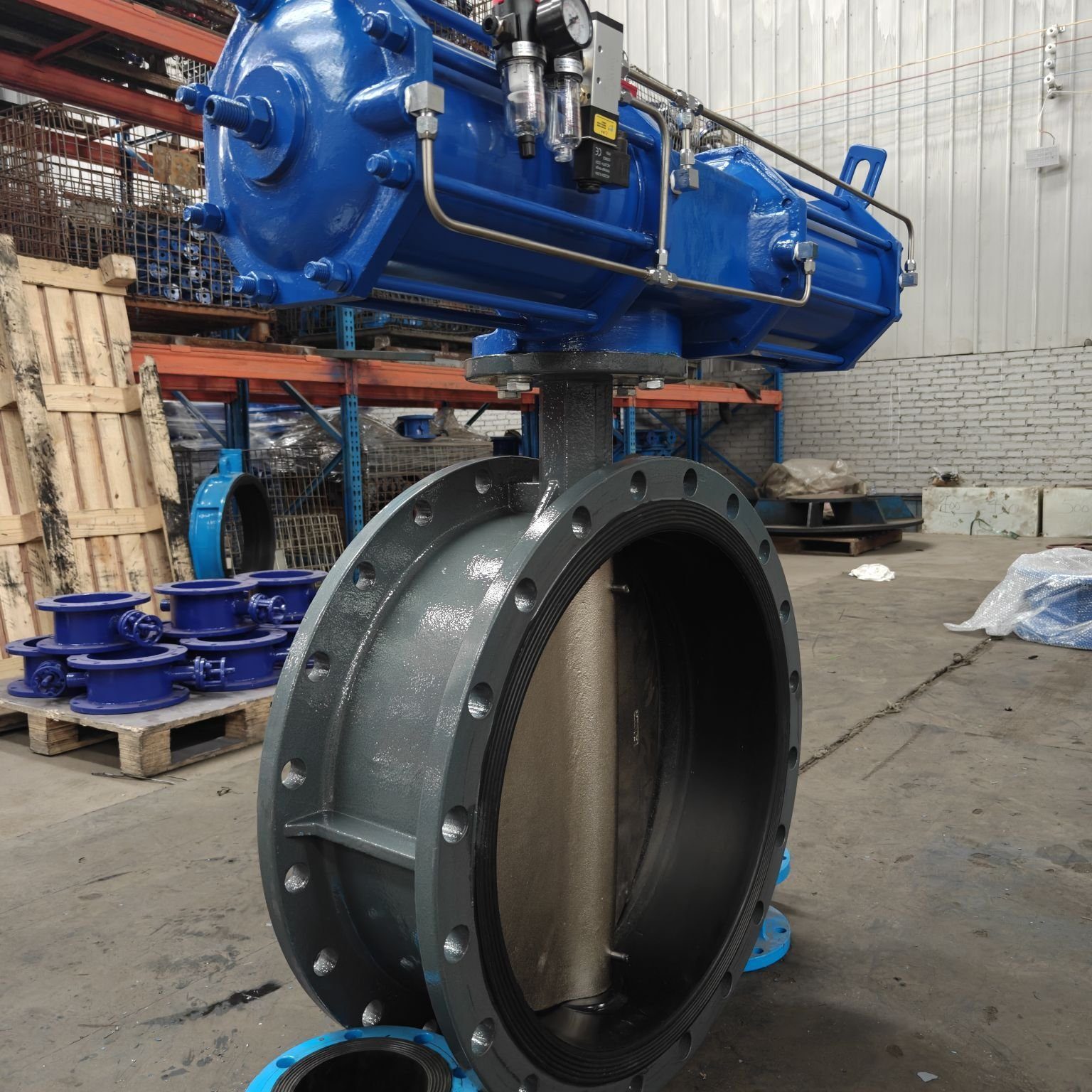
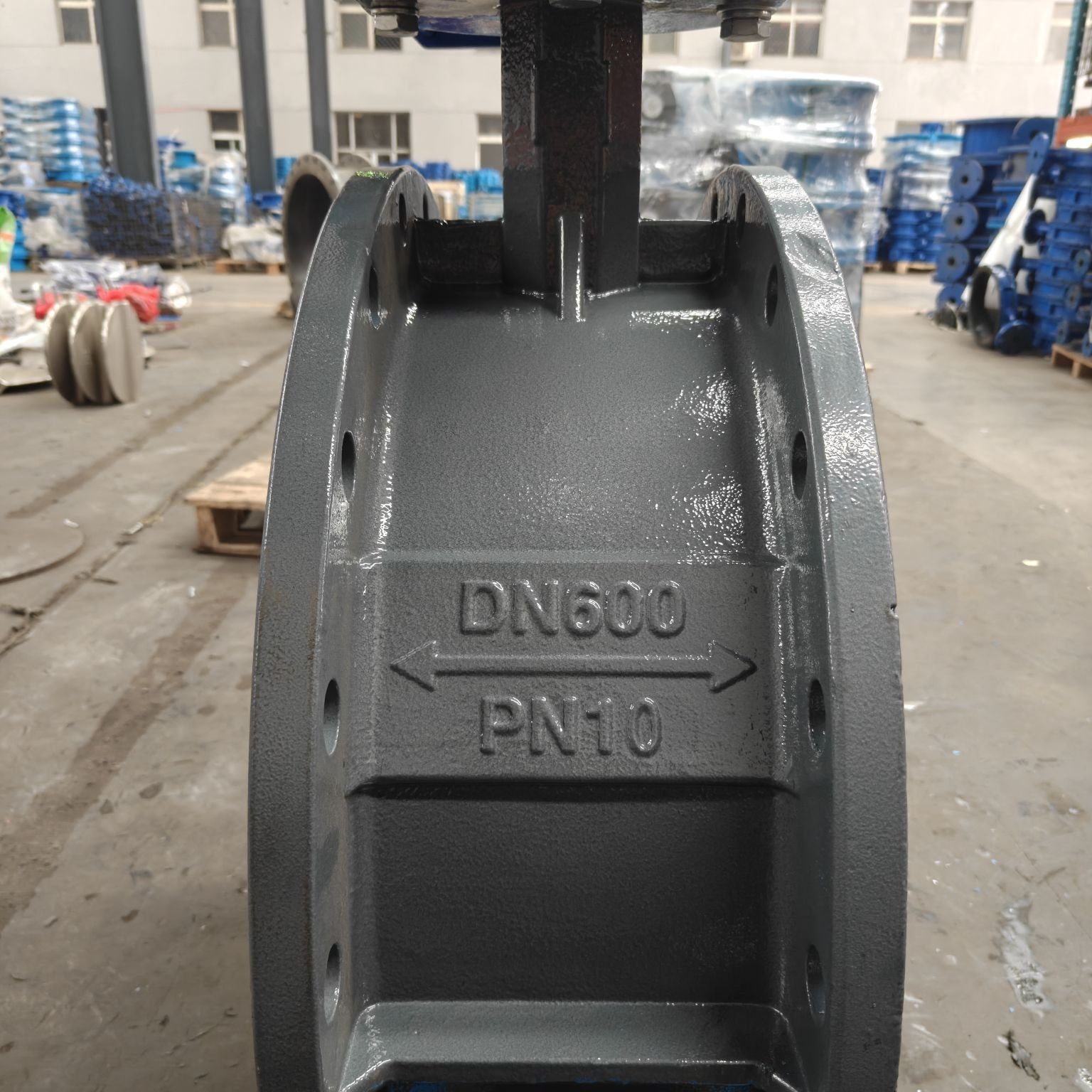
Double Flanged · DN600 PN10 · Double-Acting Actuator
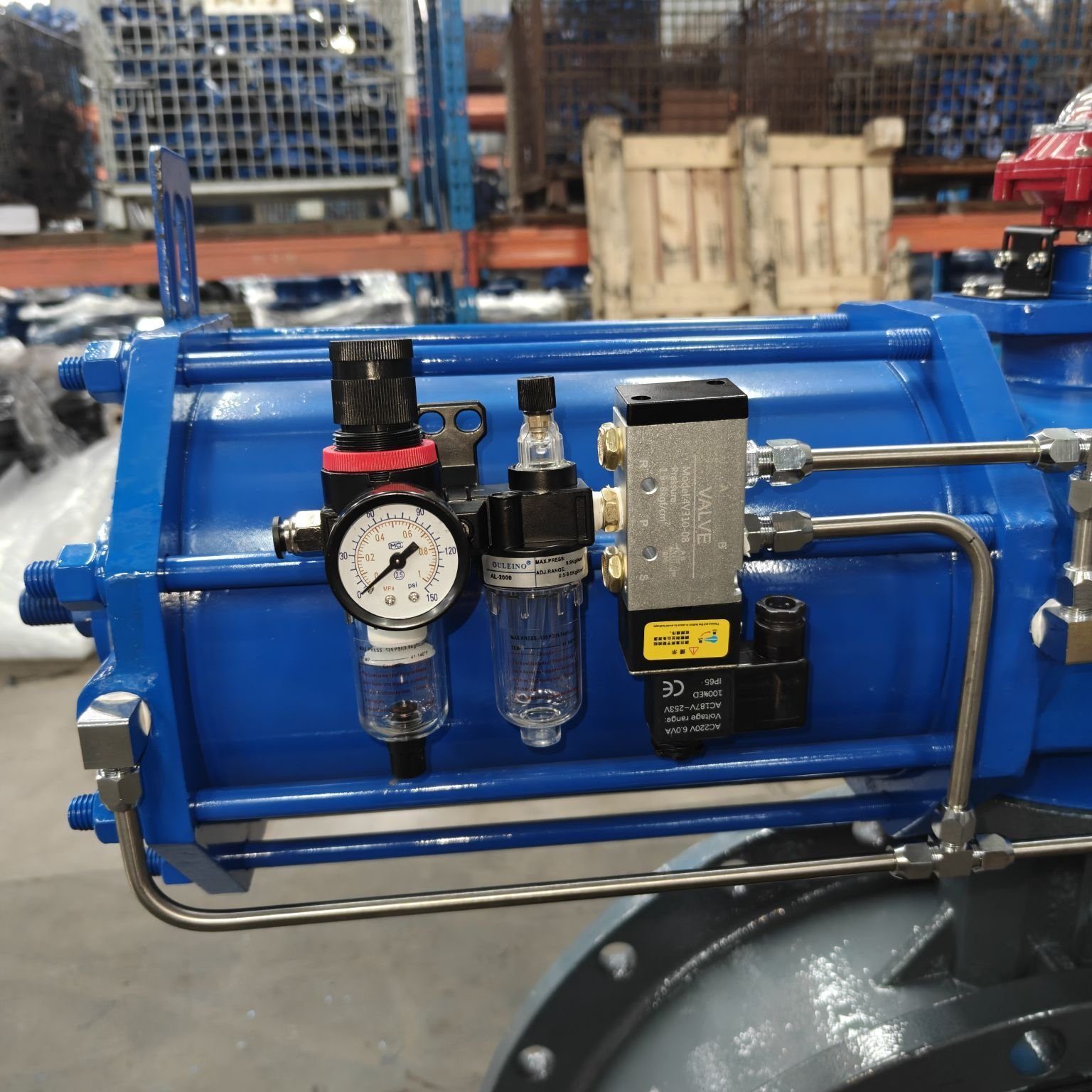
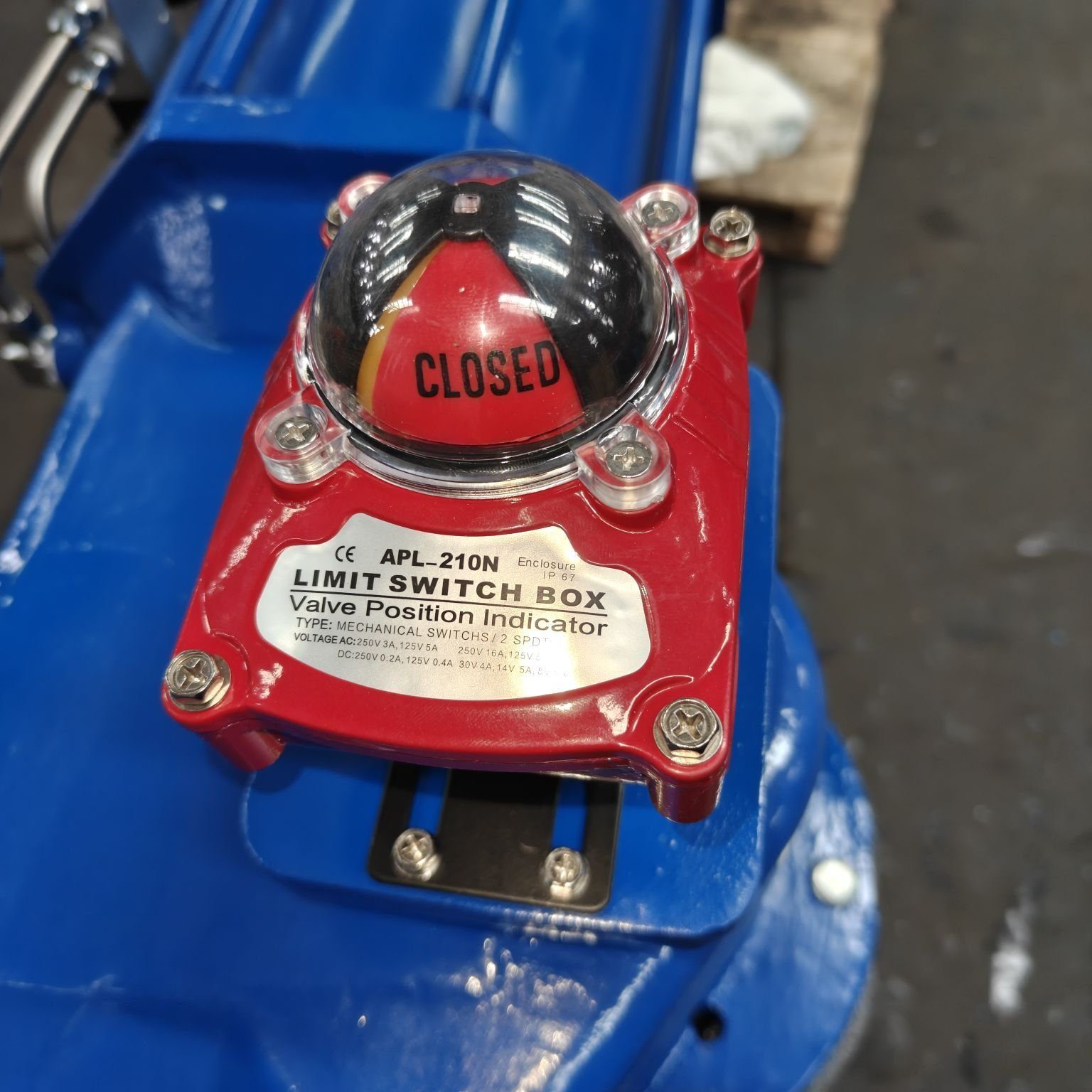
Reguvale's pneumatic flanged butterfly valve pairs a rugged double-flanged butterfly valve body with a pre-mounted double-acting pneumatic actuator for reliable automated on/off and modulating control. The assembly shown is a DN600 PN10 unit with ductile iron body, SS304 disc, EPDM seat, and a compact rack-and-pinion actuator complete with FRL unit, NAMUR solenoid valve, air-pressure gauge, and limit-switch box.
Choose spring-return (fail-safe) actuators that drive to a safe position on air loss — the usual choice for emergency shutdown (ESD) duty — or double-acting cylinders for faster cycling in modulating service. Flanged end connections handle higher pipe loads than wafer types and allow one side to be disconnected for maintenance. Standard accessories include filter-regulator-lubricator (FRL) sets, NAMUR solenoid valves (24VDC/110VAC/220VAC), mechanical limit switches, and 4–20mA I/P positioners.
All actuators mount on an ISO 5211 interface. Standard pneumatic packages cover DN50–DN600 PN10/PN16; larger bodies up to DN1200 can be supplied with a heavy-duty scotch-yoke actuator. Please note we do not hold API 607 / ISO 10497 fire-safe certification — if your specification calls for a fire-safe or fugitive-emission certificate, tell us the scope and we will confirm what can be documented before you commit. Lead times: standard pneumatic assemblies 7–10 days; custom configurations 14–18 days.
Product Photos
Key Features
Compact & Lightweight
A butterfly valve typically weighs 1/6th to 1/10th of an equivalent gate valve and requires far less installation space. This means lighter pipe supports, smaller valve chambers, and easier handling in the field.
Quarter-Turn Speed
90° rotation from fully closed to fully open in under 2 seconds (manual lever) or 1 second (actuated). Ideal for rapid-isolation applications like emergency shutdown (ESD) systems.
Tight Shutoff Performance
Concentric rubber-seated valves are pressure- and seat-tested bubble-tight to ISO 5208 Rate A (EN 12266-1 Rate A). Double-offset (high-performance) designs reduce friction and wear; triple-offset metal-seated valves give a lower leakage rate than rubber seats but are not drop-tight — specify the rate you need and we will confirm it.
Size & Pressure Range
Pneumatic packages from DN50 to DN600 as standard, with larger bodies up to DN1200 on request. PN10/PN16 for concentric rubber-seated valves; PN25/PN40 or Class 150/300 for double- and triple-offset types.
Actuation Flexibility
Manual lever, gear operator, spring-return pneumatic (fail-open/fail-close), double-acting pneumatic, electric (ON/OFF or modulating 4-20mA), and hydraulic actuator options.
Low Lifecycle Cost
Fewer moving parts than gate/globe valves, replaceable seat rings without removing the valve from the line (lug/flanged type), and no regular lubrication requirement — total cost of ownership is among the lowest.
Technical Specifications
| Parameter | Specification |
|---|---|
| Body Material | Ductile Iron (GJS400-18/GGG50) Epoxy-Coated / CF8M SS316 / Aluminum Bronze / WCB |
| Disc Material | SS304 / SS316 / Ductile Iron Nickel-Al-Bronze Plated / Aluminum Bronze |
| Seat Material | EPDM / NBR / Viton(FKM) / PTFE / Metal Seat (SS316/Inconel 625/Stellite) |
| Design Type | Concentric (Rubber-Lined) / Double Offset / Triple Offset |
| Size Range | DN50 – DN600 standard pneumatic packages; larger bodies up to DN1200 on request |
| Pressure Rating | PN10 / PN16 (concentric) · PN25 / PN40 / Class 150 / Class 300 (double- and triple-offset) |
| Installation | Wafer (sandwich between flanges) / Lug (threaded inserts) / Double Flange |
| Operation | Pneumatic double-acting or spring-return (fail-safe) / Lever handle / Worm gearbox / Electric |
| Actuator | Rack-and-pinion (AT double-acting / GT spring-return) or scotch-yoke for large torque; aluminium body, hard-anodised, NAMUR interface, ISO 5211 mounting |
| Solenoid valve | NAMUR mount, 5/2 for double-acting or 3/2 for spring-return, 24 VDC / 110 VAC / 220 VAC, IP65 coil, manual override, with flyback diode |
| Limit switch box | Mechanical 2 × SPDT (APL-210N type) or proximity switches, IP67, visual position indicator |
| Air supply | Filtered, dry, lubricated or non-lubricated air at 4–8 bar (typical 5.5 bar); FRL unit with gauge supplied as standard |
| Positioner | Electro-pneumatic 4–20 mA (I/P) for modulating control, on request |
| Temperature | EPDM: −20 to +120°C · NBR: −20 to +82°C · Viton/FKM: −15 to +200°C · PTFE: −20 to +200°C · metal seat: up to about +550°C |
| Leakage rate | Concentric rubber-seated: ISO 5208 Rate A / EN 12266-1 Rate A (bubble-tight) · double- and triple-offset: ISO 5208 Rate B or C — specify the rate your project needs and we will confirm it |
| Standards | EN 593 (product) · EN 558 (face-to-face) · ISO 5752 · MSS SP-67 · JIS B2032 · flange drilling to EN 1092-2 or ASME B16.5 |
| Certification | ISO 9001:2015 (scope: manufacture of metal butterfly valves) · SGS-CSTC factory audit report · EN 10204 3.1 mill certificate per batch. We do not hold API, CE, WRAS, NSF, 3-A, ATEX or SIL certification — solenoid and switch components carry their own manufacturer declarations, which are not our own certification. |
Spring-Return or Double-Acting?
This is the first decision on any actuated valve, and the one that most often has to be changed after the fact. It follows from what the valve must do when the air fails, not from price.
| Spring-return (single acting, fail-safe) | Double-acting | |
|---|---|---|
| Behaviour on air or power loss | Drives to a preset safe position (fail-closed or fail-open) | Stays in the last position |
| Typical duty | Emergency shutdown (ESD), isolation where a valve must not stay open, tanks and dead-end service | Modulating and throttling service, fast cycling, lines where staying put is acceptable |
| Output torque | Lower than a double-acting unit of the same size, because the spring takes part of it — and it must still exceed the valve torque at the end of travel | Full air torque in both directions |
| Effect on sizing | Often one frame size larger than double-acting for the same valve | Smallest frame size for the duty |
| Solenoid valve | 3/2 (three-way, two-position) — pressurise to stroke, exhaust to let the spring return | 5/2 (five-way, two-position) — air to both ports |
| Relative cost | Higher — spring cartridge and extra end-cap machining | Lower |
| Air consumption | One air stroke per cycle (return is by spring) | Two air strokes per cycle |
Rule: if losing air must leave the valve open or closed for safety, it is spring-return — and then the torque must be checked on the spring stroke, not only against the air supply. If the valve only has to hold a position, double-acting is cheaper, smaller and faster.
Actuator Sizing: The Torque Question
An actuator is selected from the valve's break torque (to unseat the disc) and run torque, multiplied by a safety factor that depends on the medium. Under-sizing is the most common failure on actuated butterfly valves: the valve strokes in the workshop and stalls in service.
| Service | Safety factor on valve torque | Why |
|---|---|---|
| Clean water, HVAC, neutral liquids | 1.25 | Stable friction, predictable torque |
| General process liquids | 1.3 – 1.5 | Temperature and wear margin |
| Dry gas, powder, cement, calcium carbonate | 1.5 – 2.0 | Dry media raise seat friction; powder embeds in the seat edge |
| Slurry, abrasive or scaling media | 2.0 or more | Solids build-up on the seat and disc edge |
For spring-return actuators, the check is done twice: once on the air stroke and once on the spring stroke, using the actuator's published torque at the relevant travel angle. If the medium is dry or abrasive, tell us — it is the reason a valve that works on the bench fails after three weeks in a cement plant.
What to Send Us for an Actuated Valve Quote
For a pneumatic package, these lines remove every question we would otherwise have to ask.
| # | Item | Why we need it |
|---|---|---|
| 1 | Size (DN or inch) and quantity | Valve torque and actuator framing |
| 2 | Medium, concentration and working temperature | Body grade and seat compound |
| 3 | Pressure rating and flange standard | PN10/PN16 (EN 1092-2) or Class 150 (ASME B16.5) |
| 4 | End connection (wafer, lug or double-flanged) | Dead-end service and pipe-load requirements |
| 5 | Fail-safe requirement: fail-closed, fail-open, or none (double-acting) | Decides the actuator type and the solenoid function |
| 6 | Solenoid voltage and area classification | 24 VDC / 110 VAC / 220 VAC; for hazardous areas we will confirm what the coil can be certified to |
| 7 | Limit switch and position feedback needed | 2 × SPDT mechanical, or proximity switches for a PLC |
| 8 | Modulating or on/off duty, and the control signal | Positioner (4–20 mA) instead of a solenoid |
| 9 | Available air supply pressure and quality | Confirm the actuator can develop the required torque at your line pressure |
| 10 | Destination port and documents required | Freight basis, packing and certification scope |
Frequently Asked Questions
Spring-return or double-acting pneumatic actuator — which do I need?
Spring-return (fail-safe): Returns to a safe position (open or closed) on air loss — the usual requirement for emergency shutdown (ESD) and for isolation where the valve must not stay open. Slightly larger cylinder and a lower output torque, so check the spring-stroke torque when sizing.
Double-acting: Needs air both ways; fails in place on air loss. More compact and economical, ideal for modulating/throttling service where fail-safe is not mandated.
Common questions about pneumatic butterfly valves answered by our engineering team.
Wafer type vs lug type vs flanged — which should I choose?
Wafer: Sandwiched between two pipe flanges using through-bolts. Cheapest, lightest, but one side must stay bolted for maintenance. Best for non-critical, dead-end not needed.
Lug: Has threaded inserts (lugs) with independent bolts. One side can be disconnected while the valve stays sealed against the other flange — ideal for dead-end service, tanks, equipment isolation.
Flanged (double-flanged): Has its own integral flanges matching pipe flanges. Strongest, supports pipe loads, best for large sizes (DN300+), buried service, and high-vibration applications.
What seat material should I select for my application?
EPDM: Best all-round for water, air, and weak chemicals up to +120°C. Most common choice.
NBR (Buna-N): Good for oils, fuels, petroleum products, aliphatic hydrocarbons. Avoid with aromatic solvents and strong oxidizers.
Viton/FKM: Excellent for acids, aromatics, and high temperatures up to +200°C. Costlier but essential for chemical processing.
PTFE: Near-universal chemical resistance. Used for corrosive acids/bases. Lower temperature limit than rubber (cold-flow concern below 0°C).
Metal seat (SS316/Inconel/Stellite): Required for steam above +180°C, high-pressure gas, and services with abrasive particles that would embed in rubber seats.
Can butterfly valves be used for throttling / flow regulation?
Yes — within limits. Concentric rubber-lined valves modulate reasonably well in the 20°–70° open range and are commonly used for balancing in HVAC systems. However, for precise control or high ΔP service, double-offset or triple-offset valves with characterized discs give much better linearity, less torque variation, and longer seat life under cycling conditions.
What is double-offset vs triple-offset butterfly valve?
Double-offset (High-Performance): The shaft is offset behind the disc centerline and also offset from the body centerline. This causes the disc to swing away from the seat immediately upon opening, reducing friction and wear. Good for higher pressure/temperature than concentric, up to ~+230°C.
Triple-offset: Adds a geometric conical seat shape as a third offset. The metal-seated disc contacts the seat only at the fully closed position with zero rubbing during opening/closing cycle. Enables metal-to-metal shutoff quoted to ISO 5208 in steam and high-temperature gas service up to +550°C, replacing gate and globe valves at a fraction of the weight and cost.
How do I size a pneumatic actuator for my butterfly valve?
The actuator torque must exceed the valve's breakaway (opening) torque plus a safety factor of 1.3–1.5×. Key factors: valve size (larger = more torque), pressure differential (higher ΔP = more torque), seat material (rubber has more friction than metal), and whether it's spring-return (spring force adds to required torque). Send us your valve model, size, pressure rating, and fail-position preference — we'll specify the correct actuator package pre-mounted and tested.
What maintenance do butterfly valves require?
Rubber-lined concentric valves are nearly maintenance-free for 10–15 years in clean water service. Periodic checks: inspect seat for wear/cracks, check disc/stem for corrosion, verify actuator torque. Lug and flanged types allow in-line seat replacement. For offset valves: check seals, re-torque body bolts if needed, and lubricate the gearbox (if equipped) annually. In dirty/slurry service, plan more frequent inspections.
How do I know what size actuator my valve needs?
From the valve's break torque and run torque, multiplied by a safety factor for the medium — about 1.25 for clean water, 1.5–2.0 for dry or abrasive media such as cement or calcium carbonate powder. For spring-return units the torque must be checked on the spring stroke as well, which is why a fail-safe actuator is often one frame size larger than the double-acting unit for the same valve. Send us the size, medium and air pressure and we will size it for you.
What air supply does a pneumatic butterfly valve need?
Filtered, dry air at 4–8 bar; most actuators are sized at around 5.5 bar. We supply a filter-regulator-lubricator unit with a gauge as standard so the pressure at the actuator is known. Lubricated air is not mandatory but extends seal life; if your plant supplies oil-free instrument air, tell us and we will select the seals accordingly.
Does the package arrive assembled and tested?
Yes. The actuator, mounting kit, solenoid valve, limit switch box and FRL are assembled and function-tested on the valve before packing, and we can send the test record with the shipping documents. The valve and actuator interface is ISO 5211, so the actuator can be replaced in the field without machining.
Can you supply the pneumatic package for a hazardous area?
The solenoid coil and switch box are supplied with the component manufacturer's declaration and IP rating datasheet, and we will confirm exactly what documentation can be provided for your area classification before you commit. We do not hold ATEX or IECEx certification in our own name, so for a classified area the certificate is the component maker's, not ours — please do not assume otherwise from a datasheet.
Applications & Use Cases
Water Treatment Plants
Raw water intake, clarifier inlet/outlet, filter backwash, disinfection lines
HVAC & Chilled Water
Chiller/cooling tower isolation, AHU coil control, thermal energy storage
Chemical Process Industries
Caustic/solvent/acid transfer lines, batch reactor feed, tank farm
Power Generation
Cooling water circulation, boiler feedwater auxiliary, FGD slurry handling
Marine & Offshore
Sea water cooling, ballast water treatment, bilge/fire main systems
Related Products
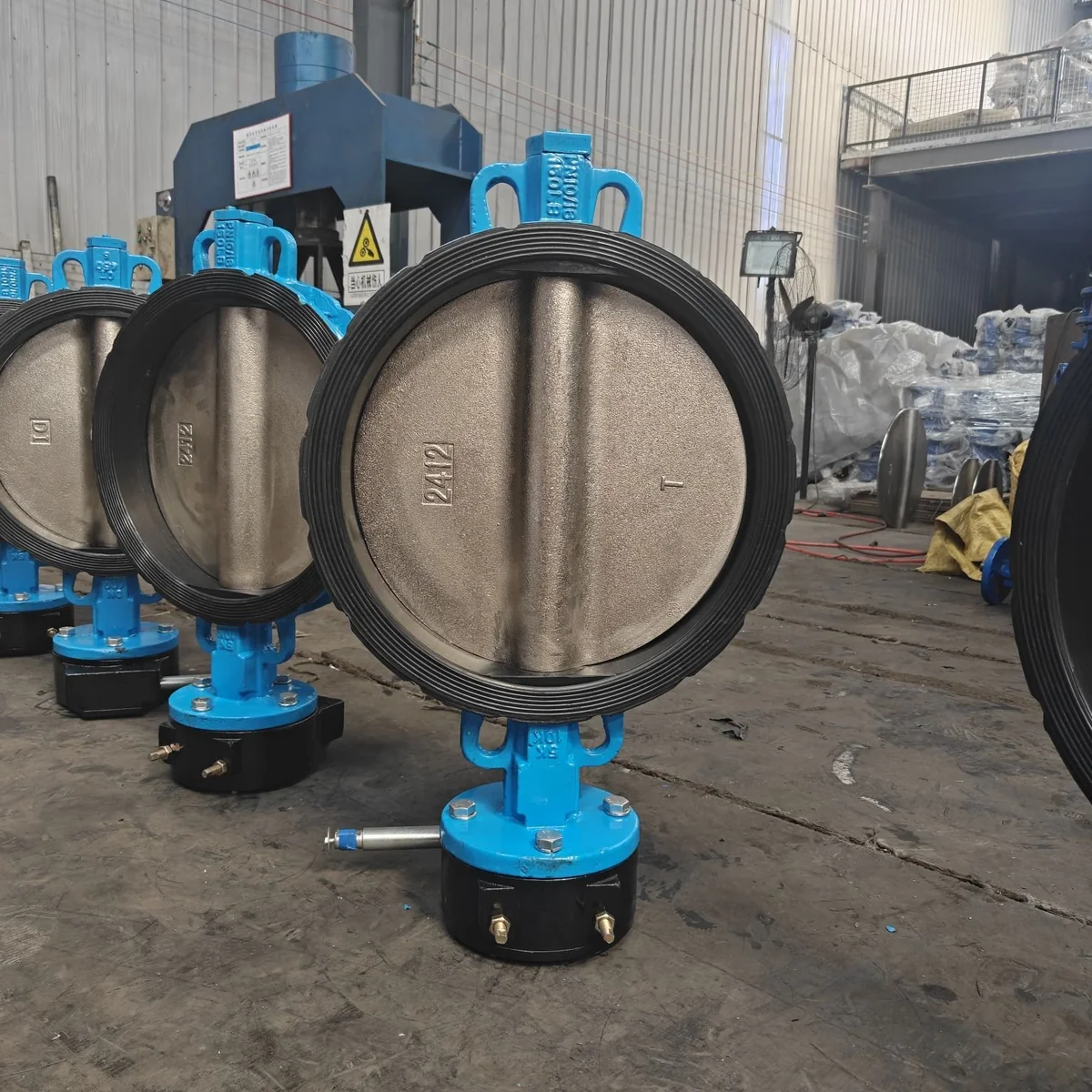
Wafer Butterfly Valves
Wafer · Lug · Double Offset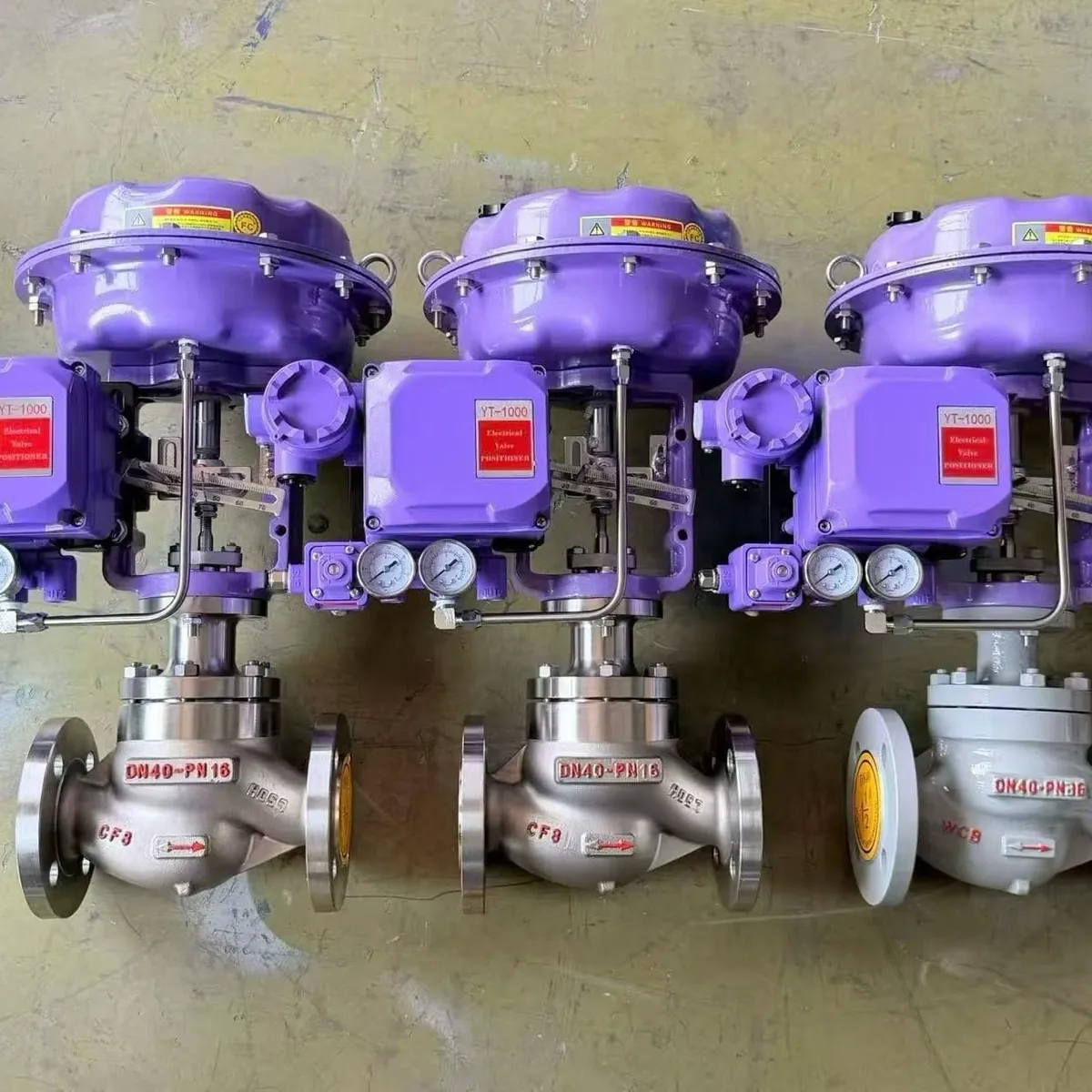
Control Valves
Diaphragm · Electric · Cage-Guided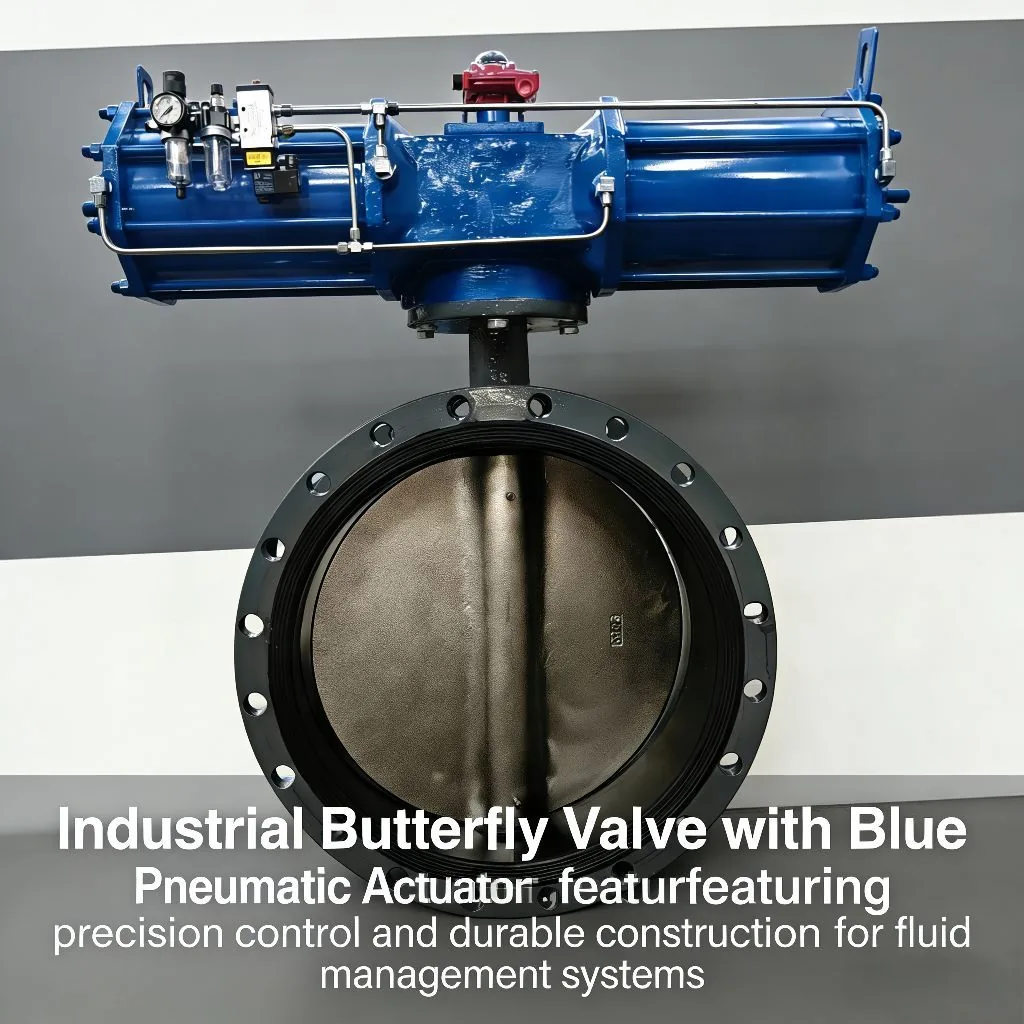
All Valves
Full catalog & coming soonRelated Articles
Helpful guides to help you specify and maintain butterfly valves.