For lines where EPDM is not enough
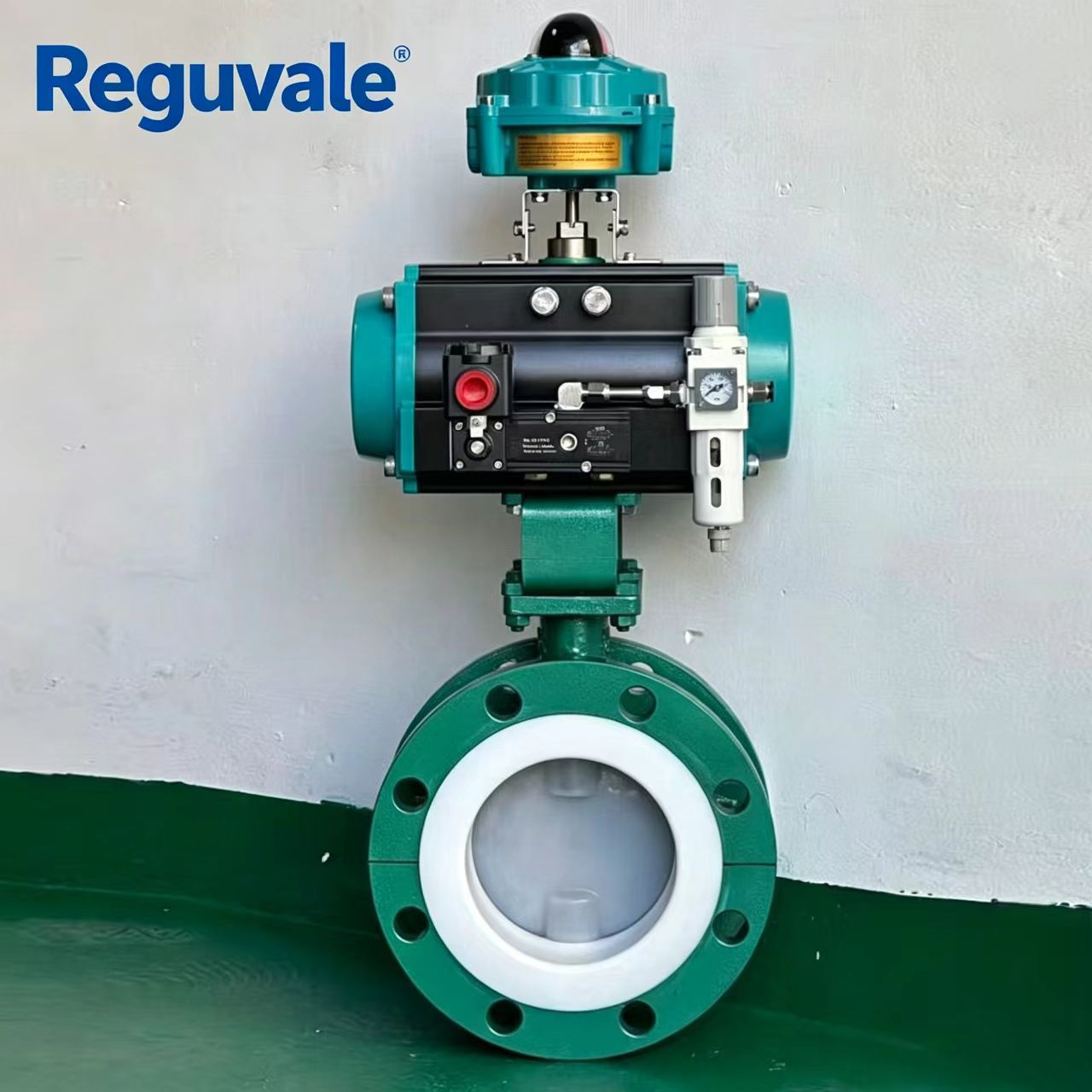
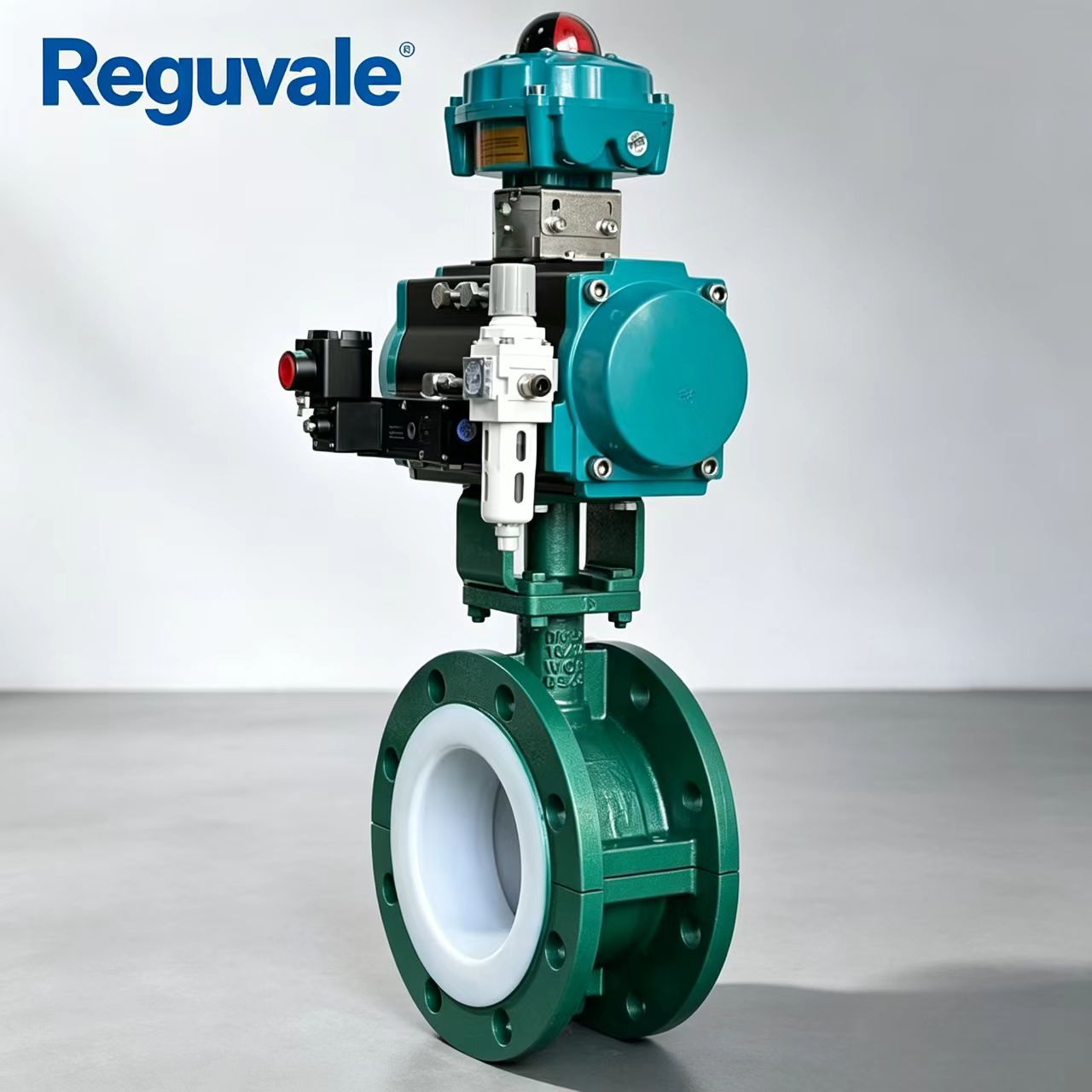
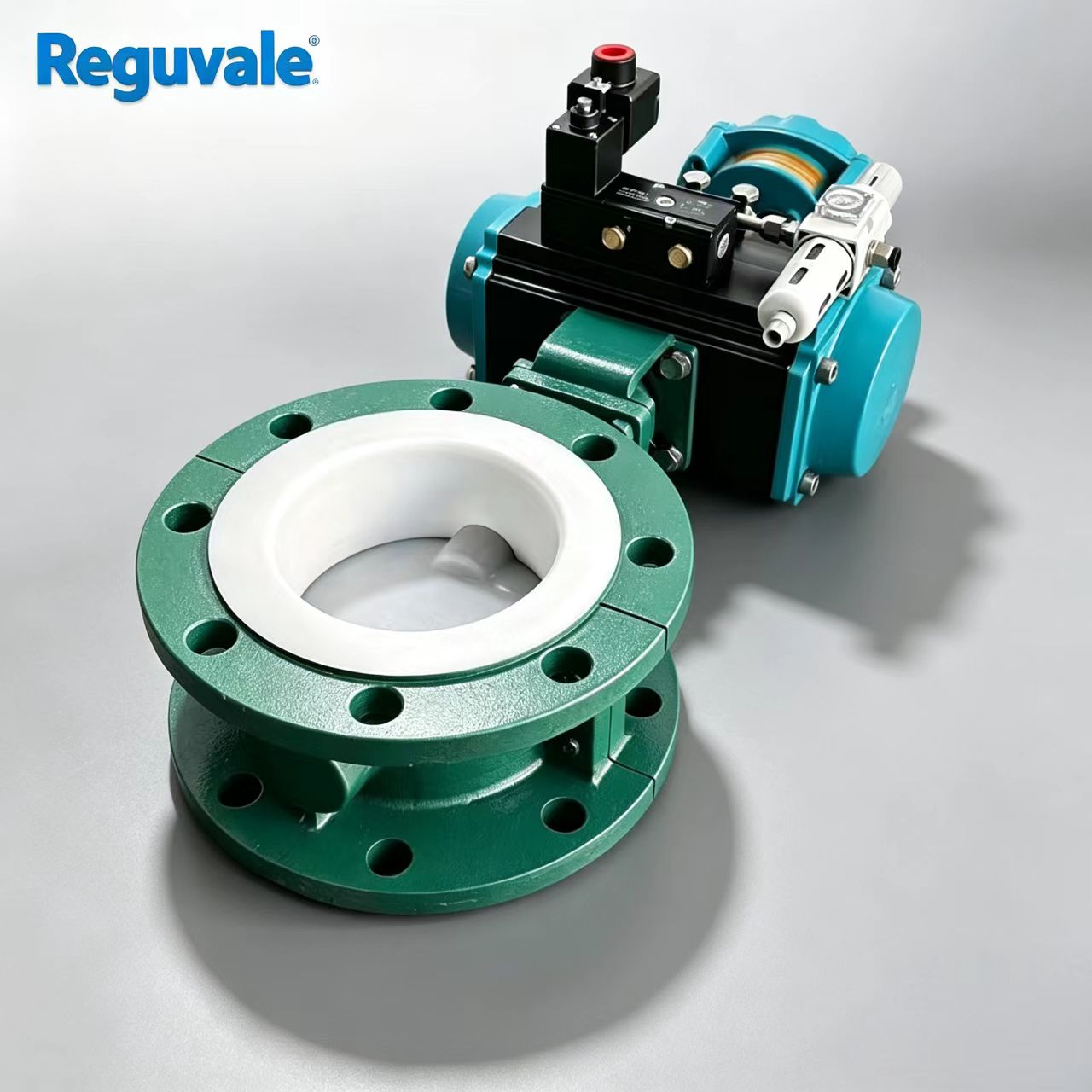
A PTFE seat changes what the valve can touch. Where EPDM would swell or degrade on acids, alkalis, solvents or CIP chemicals, the PTFE seat keeps the sealing face inert and the disc encapsulated in stainless.
The body is ductile iron with an epoxy coating, the disc is stainless steel encapsulated in PTFE, and the seat is a PTFE liner rather than a rubber ring. The result is a valve that can be cleaned, flushed and put back into a chemical line without the seat absorbing the medium.
Supplied with a pneumatic actuator as standard: double acting, or spring return where the valve must fail closed on air loss. A limit switch box and solenoid valve can be fitted before dispatch.
| Size range | DN50 - DN600 |
|---|---|
| Pressure class | PN10 / PN16 |
| Body | Ductile iron, epoxy coated |
| Disc | Stainless steel, PTFE encapsulated |
| Seat | PTFE |
| Temperature | -20 to 150 C (PTFE) |
| Actuator | Pneumatic, double acting or spring return |
| Air supply | 4-7 bar, filtered and dry |
| Accessories | Limit switch box, solenoid valve, filter regulator |
| Testing | Pressure tested and cycled before dispatch |