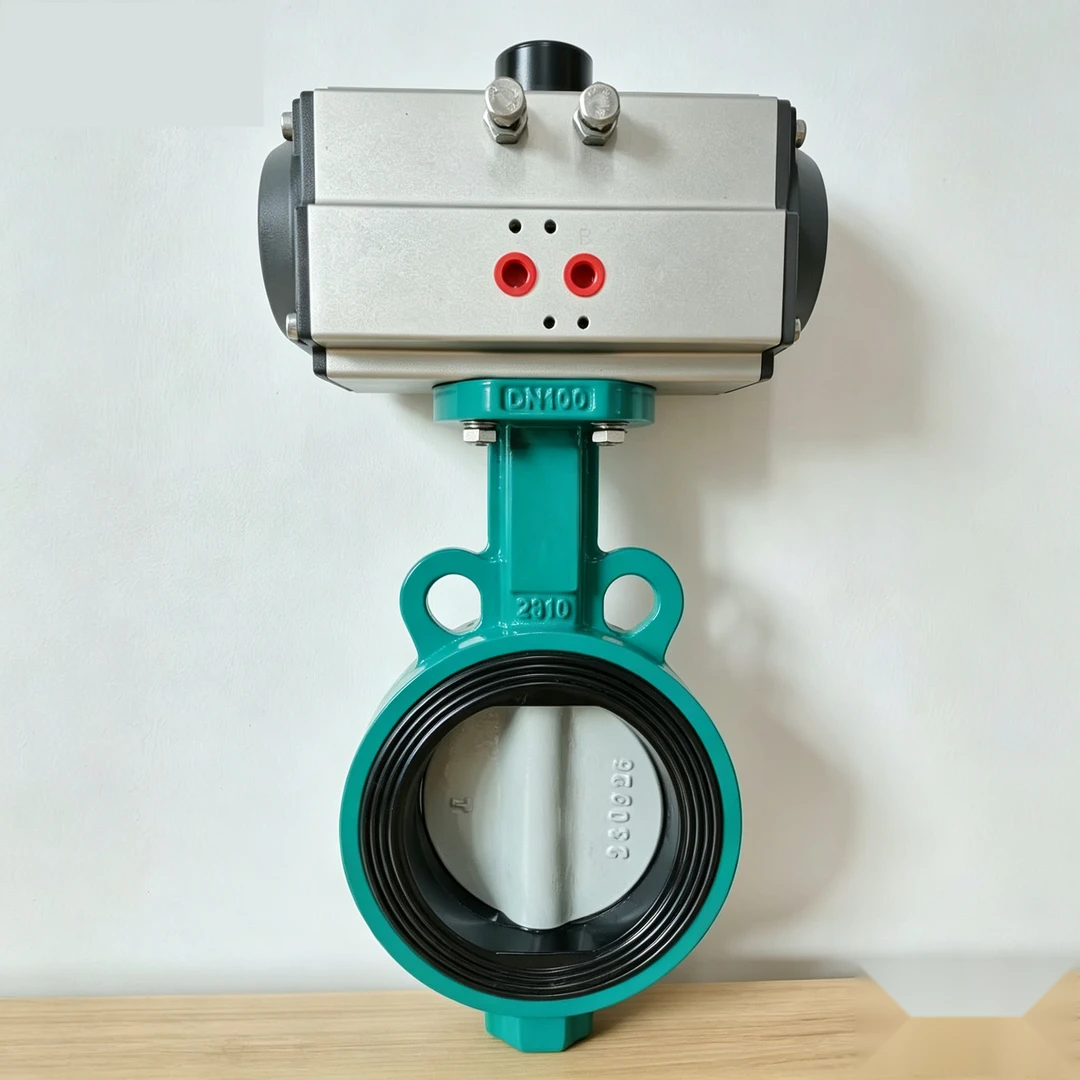
V-Port Control Ball Valve
V-Port Control · DN25–DN300 · PN16/40 · Modulating
The V-port ball valve uses a contoured V-notch ball for near-equal-percentage flow characteristic — a robust alternative to globe valves for slurry and fibrous fluids.
Paired with a pneumatic or electric actuator and positioner it modulates flow, pressure or ratio in process loops.
Key Features
Bubble-Tight Shutoff
Soft PTFE seats give zero-leakage shutoff for gas, water and chemical service.
Low Torque
Floating and trunnion designs keep operating torque low for lever or compact actuators.
Anti-Blowout Stem
Stem shoulder and live-loaded packing prevent ejection under line pressure.
Fire-Safe Design
Metal-to-metal backup seat holds line pressure after a fire (design principle; no API 607 certificate held).
Actuator Ready
ISO 5211 flange accepts pneumatic or electric actuators and gearboxes.
Full / Reduced Bore
Full-bore models give unobstructed Cv; reduced-bore saves weight and cost.
Technical Specifications
| Parameter | Specification |
|---|---|
| Body Material | WCB Carbon Steel / SS304 / SS316 / CF8M |
| Ball / Trim | SS304 / SS316 / 17-4PH |
| Seat Material | PTFE / RPTFE / PEEK / Metal |
| Size Range | DN15 – DN600 (1/2" – 24") |
| Pressure Rating | PN16 (ANSI 150 / 300) |
| End Connection | Flanged / Threaded / Welded / Wafer / Tri-clamp |
| Operation | Lever / Gear / Pneumatic / Electric Actuator |
| Bore | Full Bore / Reduced Bore |
| Fire Safe | Fire-safe design with metal backup seat (design principle; no API 607 certificate held) |
| Leakage Class | Bubble-tight, ANSI Class VI (soft seat) |
| Standards | API 608 / ISO 17292 / GB/T 12237 |
| Certification | ISO 9001:2015, MTC available |
How to Specify a V-Port Control Ball Valve
A V-port ball valve is a control valve built on a ball. It gives a near-linear or equal-percentage characteristic with the shut-off quality of a ball valve, which is why it is used where tight closure and modulation are both needed.
The V-notch shapes the characteristic
The V cut in the ball produces a progressive opening rather than the step change of a plain port. This is what makes the valve usable for throttling instead of on/off duty.
Match the characteristic to your loop
As with any control valve, the right characteristic depends on valve authority. Read how to select a control valve flow characteristic before you specify, or send us the loop data and we will check it.
Size on normal flow, not maximum
A control valve that is oversized controls badly at low load. Size on the normal flow and confirm the maximum still passes — the same principle as any control valve, described in our control valve sizing guide.
Metal or soft seat
A soft seat gives bubble-tight closure for clean media. A metal seat survives higher temperature and abrasive service at the cost of a looser leakage class. Decide which matters more.
Actuator and positioner together
A V-port valve is only as good as its positioning. Specify the positioner with the valve, and say whether the loop needs 4–20 mA feedback to the control system.
Installation & Maintenance
Leave straight pipe upstream
Turbulence from an elbow immediately upstream distorts the characteristic. Allow several diameters of straight run.
Check the flow direction
The V-port is directional. Fitting it backwards changes the characteristic and can damage the seat edge.
Commission the positioner after installation
Calibrate against the installed valve, not the bench. Our positioner calibration guide sets out the procedure.
Keep solids out
A V-port is a control trim, not a slurry valve. Where the medium carries solids, a different design is usually the right answer.
Common Specification Mistakes
Treating it as an on/off valve
You pay for a control trim and get none of the benefit.
Sizing on maximum flow
The valve then spends its life in the bottom of its travel where control is worst.
Ignoring valve authority
The best trim in the world cannot fix a loop with very low authority.
Frequently Asked Questions
What is the difference between floating and trunnion ball valves?
Floating ball valves seat the ball against the downstream seat by line pressure (DN15–DN150). Trunnion-mounted balls are held by top and bottom shafts for larger sizes (DN200+) and higher pressures.
Which seat material should I choose?
PTFE / RPTFE for most chemicals and clean fluids up to +200°C. PEEK for higher temperature. Metal seat for slurry, abrasive or high-temperature service.
Can ball valves be used for throttling?
Ball valves are best for on/off. For modulating duty use our V-port control ball valves or control valves, which keep a stable characteristic curve.
Applications & Use Cases
Oil & Gas
Pipeline isolation, tank farm and loading arms with fire-safe soft seats.
Water & Utilities
Municipal water, HVAC and irrigation with flanged or wafer ends.
Chemical
Corrosive media handled in SS316 or PTFE-seated bodies.
Food & Pharma
Tri-clamp and polished SS316 ball valves for hygienic lines.