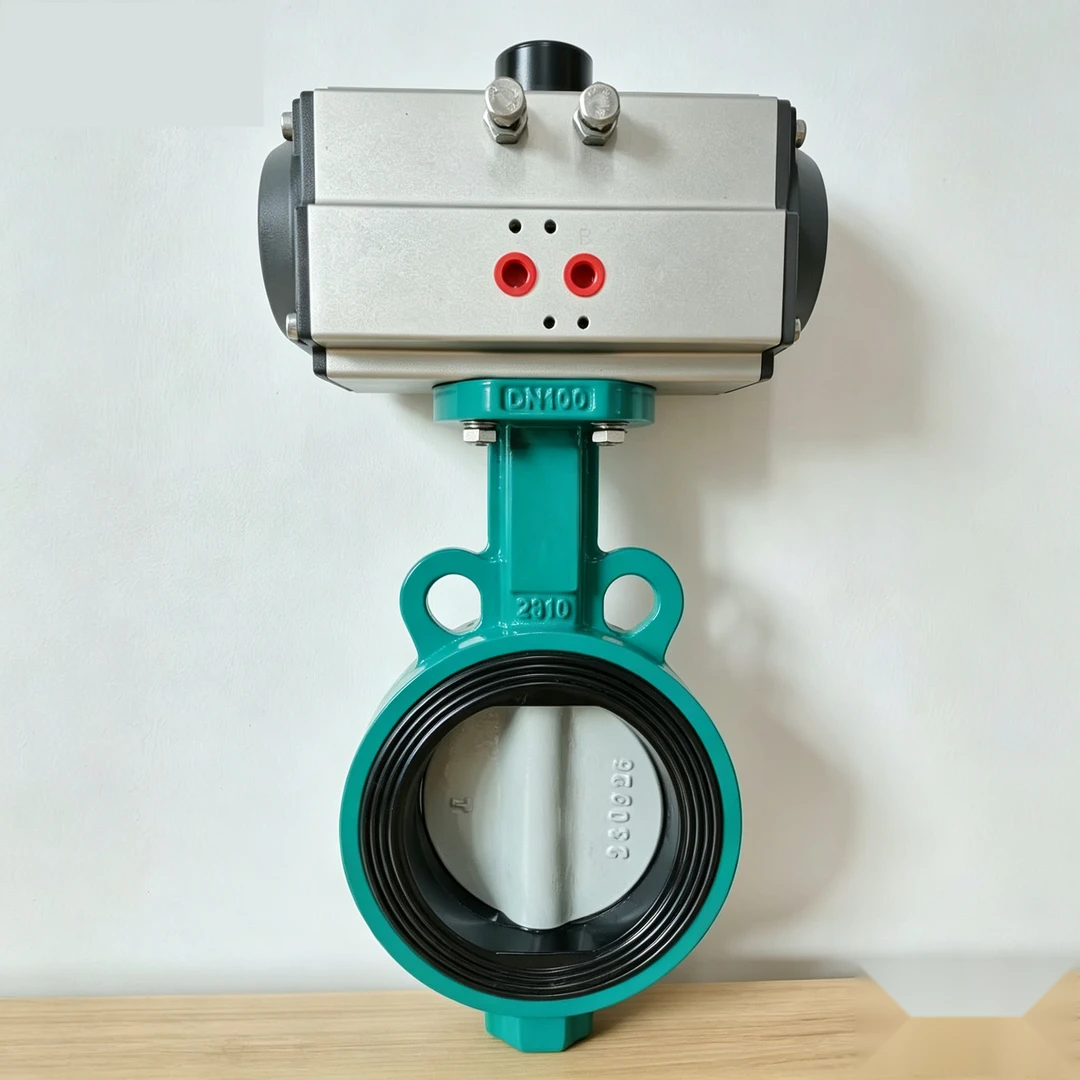
Knife Gate Valve for Slurry
Knife Gate · DN50–DN600 · PN10/16 · Slurry / Pulp
A knife gate valve has a sharpened disc that shears through slurry, pulp and sludge where a wedge gate would jam.
Widely used in mining, wastewater and bulk-solids handling with resilient or metal seat. For slurry line data, wear material selection and the test documentation mining projects request, see our valves for mining and slurry transport page.
Key Features
Tight Isolation
Wedge-to-seat geometry gives reliable shutoff with minimal leakage.
Low Pressure Loss
Straight-through bore keeps pressure drop near zero in open position.
Rising / Non-Rising Stem
OS&Y rising stem shows open/closed at a glance; NRS suits buried service.
Resilient or Metal Seat
EPDM/NBR for water; SS316/Stellite for steam and slurry.
Bi-Directional
Wedge disc seals in both flow directions for flexible installation.
Actuator Ready
Top flange accepts gearbox, pneumatic or electric actuators.
Technical Specifications
| Parameter | Specification |
|---|---|
| Body Material | WCB / SS304 / SS316 / Ductile Iron GGG50 |
| Wedge / Disc | Solid Wedge / Flexible Wedge / Parallel Slide |
| Seat Material | Resilient (EPDM / NBR) / Metal (SS316 / Stellite) |
| Size Range | DN40 – DN1200 (1.5" – 48") |
| Pressure Rating | PN10 / PN16 (ANSI 150 / 300) |
| End Connection | Flanged (ISO 7005-2 / ASME B16.5) / Butt-Weld |
| Stem Type | Rising Stem (OS&Y) / Non-Rising Stem |
| Operation | Handwheel / Gearbox / Pneumatic / Electric |
| Temperature | Resilient: -10→+80°C ; Metal: -40→+425°C |
| Leakage | Tight shutoff, bubble-tight with resilient seat |
| Standards | Design reference: API 600 / GB/T 12234 / EN 1171 — no API monogram held (API 609 applies to butterfly valves, not gate valves) |
| Certification | ISO 9001:2015, MTC available |
How to Specify a How to Specify a Knife Gate Valve for Slurry
A knife gate valve is chosen for one reason: the medium will not pass through a wedge-seated gate valve. These are the points that decide whether it survives.
Solids content and particle size set the trim
A knife gate has no cavity for solids to pack into, which is why it works on slurry. Tell us the solids concentration and the largest particle size — those two numbers decide the disc material and whether the seat should be metal or elastomer.
Line velocity matters as much as the medium
Abrasion rises steeply with velocity. If the slurry line runs fast, a hardened or Stellite-overlaid disc lasts substantially longer than a standard stainless one.
Wafer or flanged body
The wafer body is lighter and cheaper but gives no downstream flange support. On a line with vibration, or where the valve is the last item before a break, the flanged body is the safer choice.
Choose the actuator for the duty, not the size
Slurry lines are often automated. Knife gates need enough thrust to cut through a settled bed of solids, so state the medium rather than just the line size when ordering an actuated version.
Plan for the seat to be replaceable
In abrasive service the seat is the consumable. Ask what a seat replacement kit contains and how often it is expected, and compare that against a cheaper valve that has to be replaced whole.
Installation & Maintenance
Mount with the seat facing the flow
The seat side should face upstream so the disc seats against pressure rather than being pushed off it.
Leave room to withdraw the disc
A knife gate disc travels fully clear of the bore when open. Make sure nothing — a neighbouring flange, a wall, a handrail — blocks that travel.
Flush the body before prolonged shutdown
Slurry that dries in the body cavity will stop the disc moving. Where a line is shut down for long periods, flush it or fit a flushing connection.
Check the packing after the first weeks
The stem packing takes up on first operation. A single gland adjustment early on prevents a drip that otherwise runs for months.
Common Specification Mistakes
Using a wedge gate valve on slurry
The cavity fills with solids and the valve will not close. This is the single most common mistake in slurry service.
Sizing the actuator on line size alone
Cutting through settled solids needs more thrust than the catalogue open-close figure.
Ignoring line velocity
Doubling velocity can multiply wear rate several times over.
Frequently Asked Questions
When should I use a rising-stem (OS&Y) gate valve?
Use OS&Y where you need visual confirmation of open/closed position — typical for fire protection and above-ground piping. Non-rising stem suits buried or space-limited installs.
Resilient seated or metal seated?
Resilient (EPDM/NBR) seats give bubble-tight shutoff for clean water up to +80°C. Metal seats handle steam, slurry and temperatures up to +425°C.
Why choose a knife gate valve?
Knife gate valves have a sharpened disc that cuts through slurry, pulp and viscous media — ideal for mining, wastewater and bulk solids.
Applications & Use Cases
Water & Wastewater
Resilient-seated gate valves for mains, hydrants and treatment plants.
Fire Protection
OS&Y gate valves for sprinkler and hydrant systems.
Power & Steam
Metal-seated wedge gates for high-temperature steam lines.
Mining & Slurry
Knife gate valves for abrasive and viscous process streams.