


Pneumatic Wafer Butterfly Valve
Wafer Style · DN50–DN300 · PN10/PN16 · Spring Return / Double Acting
Reguvale's pneumatic wafer butterfly valve pairs a compact concentric wafer body with a pre-mounted rack-and-pinion pneumatic actuator for fast, reliable automated on/off and modulating control. The assembly shown uses a ductile iron or stainless steel wafer body, SS304 disc, and replaceable EPDM/NBR/PTFE seat, all mounted between two pipe flanges with through-bolts.
Choose spring-return (fail-safe) actuators that drive the valve to a safe position on air loss, or double-acting cylinders for faster cycling in modulating service. Accessories include FRL (filter-regulator-lubricator) sets, NAMUR solenoid valves (24VDC/110VAC/220VAC), mechanical limit switches, and 4–20mA I/P positioners. All actuators mount on an ISO 5211 direct-drive interface.
Standard packages cover DN50–DN300 in pressure ratings PN10/PN16. Body materials include ductile iron (epoxy coated), SS304, and SS316; seats in EPDM, NBR, Viton, or PTFE. The wafer design makes this the lightest and most economical automated butterfly valve package for water, air, HVAC, food & beverage, and light chemical service.
Key Features
Compact & Lightweight
The wafer body is the lightest and most compact butterfly valve style, reducing actuator torque, pipe support loads, and installation cost compared to flanged or lug designs.
Fast Quarter-Turn Operation
Pneumatic actuators open or close the valve in under 1 second for on/off service, and respond quickly to 4–20mA modulating signals for flow control.
Fail-Safe Option
Spring-return actuators return the valve to a safe open or closed position on air loss, meeting ESD and fire-safe isolation requirements.
Easy Automation
ISO 5211 direct mounting means solenoid valves, limit switches, and positioners bolt straight onto the actuator without complex brackets.
Bubble-Tight Shutoff
Concentric rubber or PTFE seats achieve ISO 5208 Rate A bubble-tight shutoff against water, air, and compatible fluids when properly selected.
Wide Material Choice
Bodies in ductile iron, SS304, or SS316; discs in SS304/SS316; seats in EPDM, NBR, Viton, or PTFE for different media and temperatures.
Technical Specifications
| Parameter | Specification |
|---|---|
| Body Material | Ductile Iron GGG50 (Epoxy Coated) / SS304 / SS316 |
| Disc Material | SS304 / SS316 / Ductile Iron Nickel-Al-Bronze Plated |
| Seat Material | EPDM / NBR / Viton(FKM) / PTFE |
| Design Type | Concentric (Rubber-Lined / PTFE-Lined) |
| Size Range | DN50 – DN300 (2" – 12") |
| Pressure Rating | PN10 / PN16 |
| End Connection | Wafer (Sandwiched Between Flanges) |
| Actuator | Spring-Return (Fail-Safe) / Double-Acting |
| Air Supply | 5.5 bar (80 psi) typical; 4–7 bar range |
| Temperature | EPDM: −20→+120°C | NBR: −20→+82°C | Viton: −15→+200°C | PTFE: −20→+200°C |
| Leakage Class | ISO 5208 Rate A (bubble-tight) for rubber-lined |
| Standards | ISO 5752 / MSS SP-67 |
| Certification | ISO 9001:2015 · SGS-CSTC factory audit report (on request) · EN 10204 3.1 mill certificate per batch |
Frequently Asked Questions
Spring-return or double-acting pneumatic actuator — which do I need?
Spring-return (fail-safe): Returns the valve to a safe open or closed position on air loss — required for ESD, fire-safe, and most process isolation. Slightly larger actuator.
Double-acting: Needs air in both directions; fails in place on air loss. More compact and economical, ideal for modulating/throttling service where fail-safe is not mandated.
Common questions about pneumatic wafer butterfly valves answered by our engineering team.
What is the difference between a wafer and flanged pneumatic butterfly valve?
Wafer: Sandwiched between two pipe flanges with through-bolts. Lightest, most compact, and most economical. One side must stay bolted for maintenance.
Flanged: Has integral flanges matching pipe flanges. Stronger for larger sizes, buried service, and high-vibration lines.
What seat material should I select?
EPDM: Best for water, air, and weak chemicals up to +120°C. Most common.
NBR: Good for oils, fuels, and petroleum products.
Viton/FKM: For aggressive chemicals and temperatures up to +200°C.
PTFE: Near-universal chemical resistance for corrosive acids and bases.
Can a pneumatic wafer butterfly valve be used for dead-end service?
No. The wafer body relies on both flanges to clamp it in place. One side cannot be disconnected for maintenance without the valve losing support. For dead-end or tank-bottom service, choose a lug or flanged butterfly valve instead.
Applications & Use Cases
Water Treatment
Intake, distribution, filter backwash, and disinfection lines.
HVAC & Chilled Water
Cooling tower, chiller, and air-handling unit isolation.
Food & Beverage
CIP/SIP lines, process water, and ingredient transfer with food-grade seats.
General Industry
Compressed air, light chemicals, and process water isolation.
Related Products

Pneumatic Flanged Butterfly Valves
Double Flanged · Actuated
Wafer Butterfly Valves
Manual Wafer · DN50-DN300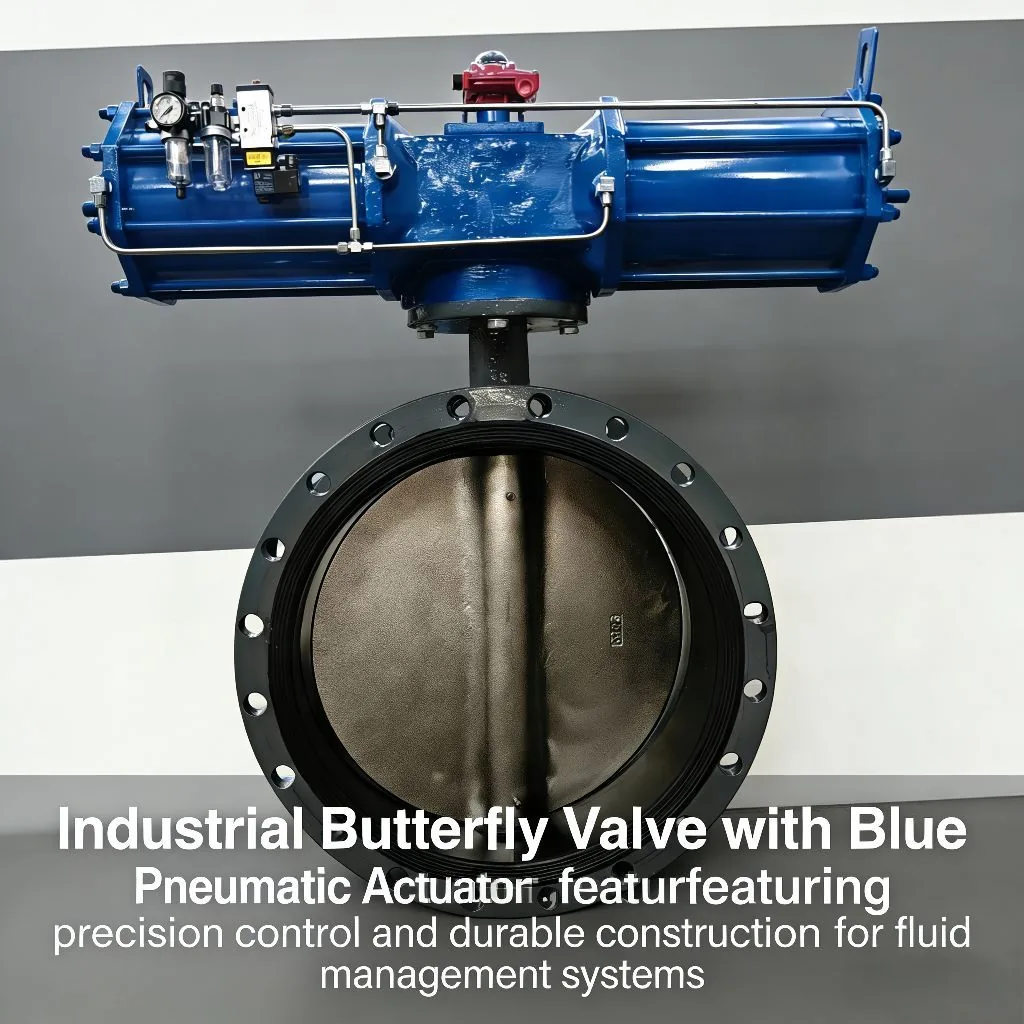
All Valves
Full catalogRelated Articles
Helpful guides to help you specify and maintain butterfly valves.